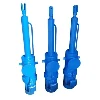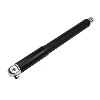
The electro-hydraulic actuator is a novel, flexible transmission mechanism that integrates mechanical, electrical, and hydraulic components. It primarily consists of a hydraulic cylinder, an electric actuator, a controller, and a feedback system. The controller adjusts the motor's speed and direction based on input signals, while the feedback system monitors the piston's position in real-time to ensure motion accuracy and stability.
Regarding intelligent control technology, the patent "An Electro-Hydraulic Control System for Electro-Hydraulic Actuators" (CN121761000A), published in December 2025, integrates units for terminal control, intelligent sensing, communication, AI-based decision-making, and monitoring. Its adaptive compensation module utilizes a BP neural network algorithm to correct baseline monitoring values in real-time using data from environmental sensors, thereby reducing measurement errors in extreme environments. Furthermore, through priority scheduling and dynamic load balancing technologies, the system ensures rapid response under extreme conditions and prevents control desynchronization caused by communication latency, achieving a closed-loop intelligent operation cycle of sensing, transmission, analysis, decision-making, execution, and optimization.
Key performance indicators for modern electro-hydraulic actuators include thrust, stroke, operating pressure, and protection rating. Their comprehensive technical characteristics include a modular design for easy installation and maintenance; a fully enclosed hydraulic system that operates smoothly without shock; and features such as overload protection, bidirectional self-locking, and position retention upon power loss. They support AC380V/DC24V power supplies and PLC/Modbus remote control, making them suitable for harsh operating conditions involving dust, humidity, and high temperatures.
High sealing performance and efficient heat dissipation are crucial for enhancing reliability in harsh environments. Relevant patented technologies employ specialized airflow designs-such as built-in exhaust impellers and cooling air ducts-to effectively extract and dissipate heat generated during operation without the need for external fans. This achieves energy-efficient, eco-friendly cooling while maintaining the system's sealing integrity.